
Built for
Banks & telcosRetail & e-commerceGovernmentContact centresMediaWhy Lebanese.ai
Dialect first, not an afterthought
Low-resource dialects
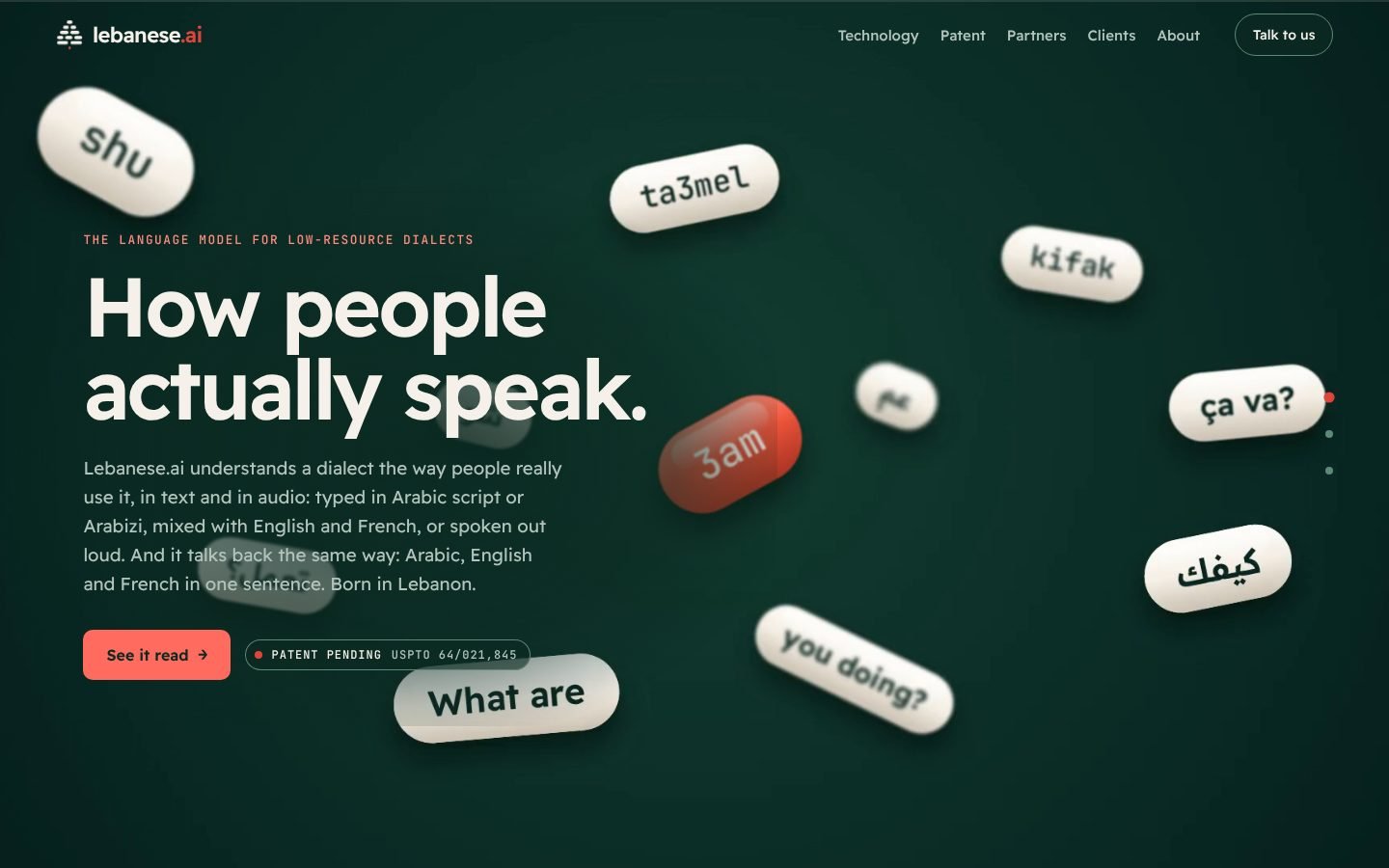
Built for dialects with little training data, starting with Lebanese, including mixed scripts like Arabizi.
One engine, more dialects
The same method extends to new dialects and regions, not only Arabic.
One engine, many channels
Translation, chat and voice from the same engine, through API or ready-made widgets.
Ready for your industry
Widgets designed for 20 industries, from banking to hospitality.
Why we win
Where Lebanese.ai is ahead
| What matters |  Lebanese.ai | Typical alternative |
|---|---|---|
| Dialects | Low-resource dialects, Lebanese first, mixed with English and French | Major languages only |
| Input | Text and audio | Text only |
| IP | US patent in final approval, owned by codeX | A generic third-party API |
| Built by | Native speakers in Lebanon | Teams far from the dialect |
How it works
Three steps from your data to results
01
Detect
Identify the dialect and register of each message.
02
Understand
Resolve meaning, intent and local expressions.
03
Respond
Reply or translate in the right tone and language, by text or voice.
Use cases
Where teams use it first
IP & status
Lebanese.ai is protected by a US patent application for a dialect AI translation system, owned 100% by codeX, now submitted for final approval.
FAQ
Questions we get asked
What is Lebanese.ai?
Lebanese.ai is a language model for low-resource dialects, starting with Lebanese. It works in text and audio and follows Arabic, English and French mixed in one sentence.
Is Lebanese.ai only for Arabic?
No. Lebanese is the first dialect; the same engine is built to extend to other low-resource dialects and regions.
Is Lebanese.ai patented?
The Lebanese.ai dialect AI translation system, owned by codeX, has been submitted to the USPTO for final approval, and the grant is expected soon.
More from codeX
Explore other products
 TerixIn use with clientsLifelike AI voice avatarExplore
 Patent pendingVerifiable AI property valuationExplore
 In R&DWearable AI companionExplore
 In developmentCloud platform for bespoke furniture factoriesExplore
 PlatformE-commerce growth platformExplore
 Ready to shipAI growth platform: CRM + AI SDRExplore
 XCabinetLaunching in CanadaModular furniture marketplace with 3D plannerExplore
 Industry editionsIndustry platforms and the Project PassportExplore